
📍 Geography & Population
Size, Location & Natural Features
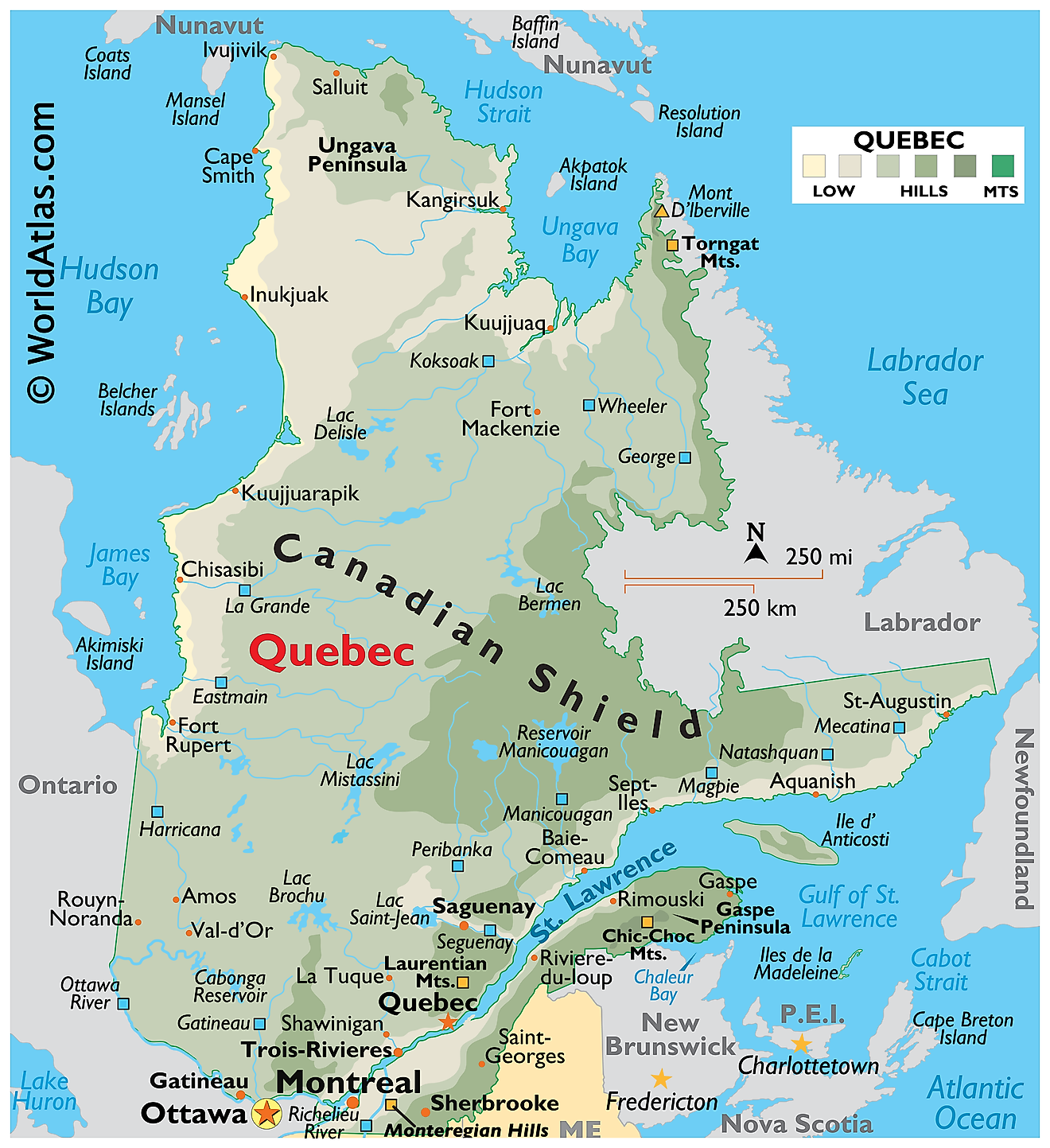
- Québec is the largest province in Canada by land area, covering roughly 1,667,441 km² — about three times the size of France. (SQRQ)
- Its geography is diverse, comprising major physiographic regions: the St. Lawrence Lowlands (fertile plains along the river), the Appalachian Uplands, and the vast stretches of the Canadian Shield to the north. (Encyclopedia Britannica)
- The province is rich in water resources: it contains over one million lakes and rivers, and is traversed by the Saint Lawrence River, a major waterway that has historically linked the interior of North America with the Atlantic. (SQRQ)
Population & Demographics
- As of January 1, 2025, Québec’s population is approximately 9.11 million, reflecting substantial growth during 2024. (Institut de la statistique du Québec)
- The recent population increase has been driven largely by international migration, including both permanent and temporary residents. (Quebec Finance)
- Historically, the province has had low population density: overall density is low because of the vast territory and concentrated settlement in the south (along the St. Lawrence Lowlands). (SQRQ)
- The majority of Quebecers live in southern Québec, especially around the metropolitan areas of the Montréal and the provincial capital Québec City. (Encyclopedia Britannica)
🕰️ Historical Background
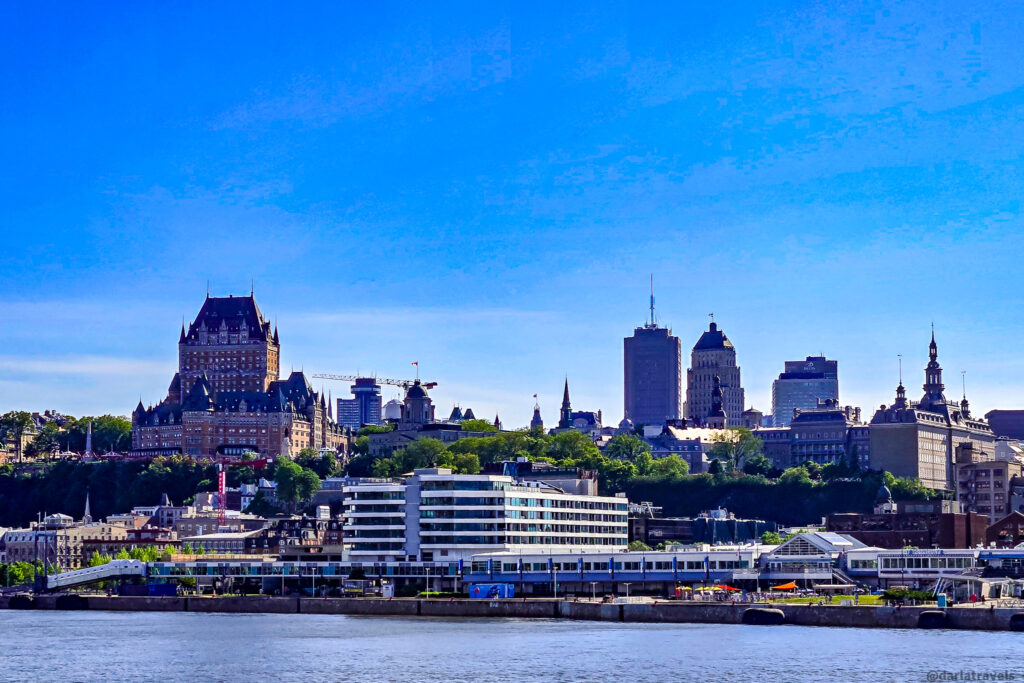
- The name “Québec” comes from an Indigenous Algonquian word meaning “where the river narrows,” referring to the narrow part of the St. Lawrence River near present-day Québec City. (Encyclopedia Britannica)
- Founded as a city in 1608 (Québec City), the region was part of New France under French colonial rule for much of the 17th and 18th centuries. (Encyclopedia Britannica)
- After the French defeat in the colonial conflicts (culminating in the Treaty of Paris 1763), control passed to the British — but the French-speaking population maintained its identity, language, culture, and civil-law legal traditions. (Encyclopedia Britannica)
- In 1867, under the founding constitutional arrangement of Canada (Confederation), Québec (formerly “Canada East”) became one of the four original provinces joining the new Dominion of Canada. (Encyclopedia Britannica)
- Over time, Québec has cultivated a distinct cultural, linguistic, and legal identity within Canada — preserving French as its primary language, and developing a unique social and institutional fabric. (Encyclopedia Britannica)
🏛️ Government Structure & Institutions
- Québec operates under a parliamentary constitutional monarchy (like other Canadian provinces), with French as its official language. (Wikipedia)
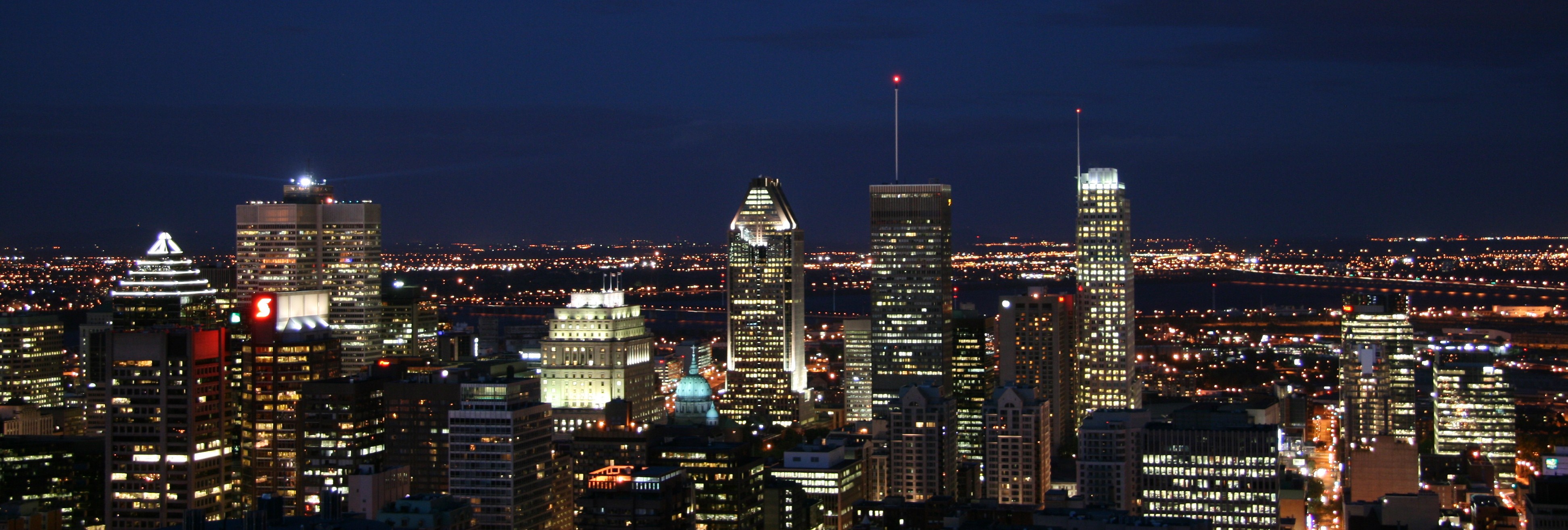
- Its capital city is Québec City. The largest metropolitan area and economic/cultural hub is Montréal. (Encyclopedia Britannica)
- The provincial legislature is the National Assembly of Québec. Members are elected to represent constituencies. (Wikipedia)
- The province sends representatives to the federal (Canada-wide) parliament; for federal elections its number of seats remains substantial, reflecting its population size. (Wikipedia)
- Québec also administers many provincial functions under the federal structure: matters such as education, health, social services, culture and language policy, natural resources, etc., are largely under provincial jurisdiction. (Canada)
💼 Economy & Key Economic Sectors
- Québec is one of Canada’s largest economies — its GDP contributes a significant share to the national total. (Wikipedia)
- The economy is diversified: the service sector (including finance, technology, trade, education, health) dominates, but manufacturing, natural resources, and hydro-based energy also remain important. (Wikipedia)
- The metropolitan Montréal area is the economic heart of the province — it produces a majority share of Québec’s GDP. (Wikipedia)
- Resources and environment: With its vast territory, forests, lakes, rivers — Québec has historically utilized forestry, mining, hydropower resources, and also hydroelectricity remains a major resource and export component. (SQRQ)
- Over the past few decades, per-capita GDP in Québec has increased significantly: for example, between 1998 and 2023 real GDP per capita rose considerably, narrowing the gap between Québec and the Canadian average. (Institut de la statistique du Québec)
- Québec’s economy has adapted over time from resource-based roots to include high value-added sectors, technology, services, and innovation — reflecting a modern, diversified economy well-integrated in national and global markets. (Canada)
📰 Current Affairs & Key Issues (as of 2025)
Population Growth and Demographic Change
- Québec’s population reached ~9.11 million as of early 2025, with a strong growth in 2024. This growth was driven almost entirely by international migration, since natural increase (births minus deaths) was negative: births were fewer than deaths. (Institut de la statistique du Québec)
- That said — population projections released in 2025 suggest the population may stabilize around 9.2 million over the next decades under certain scenarios. (Institut de la statistique du Québec)
- Different regions of Québec are experiencing varying growth rates: for 2023–2024, the Montréal region saw especially strong growth (population increase ~ 4.2 %), contributing nearly half of the province’s total growth. (Institut de la statistique du Québec)
Economy & Fiscal Outlook
- Recent economic reviews indicate that Québec has seen strong growth in real GDP per capita over the past 25 years, improving its relative economic standing within Canada. (Institut de la statistique du Québec)
- However, like many places, Québec faces economic headwinds due to global market conditions, changing trade dynamics, and the need to adapt to a post-pandemic world. As with many governments, balancing budgets, public services, and investments remains a challenge. According to some recent news reports, the province is forecasting a substantial budget deficit for 2024/25 — a situation shaped by global economic pressures and increased public service expenditures. (Reuters)
Infrastructure & Urban Development
- One example of major ongoing infrastructure development: in 2024 the provincial authorities in Québec City approved a plan for a new public-transit system — the CITÉ tramway and bus rapid transit network — involving tram lines and BRT corridors. This reflects efforts to modernize transit and address urban growth. (Wikipedia)
- Urbanization, population growth (especially in major metros), and immigration are shaping demand for housing, services, integration supports, and infrastructure — creating both opportunities and pressures for provincial and municipal governments.
Language, Culture & Identity (Implicit Context)
- As the major Francophone province, Québec preserves French as its official language. Its cultural, social, and legal distinctiveness within Canada remain important features of its identity. (Canada)
- Immigration and demographic change create opportunities for growth and diversity — but also challenges for integration, language policy, and preservation of Québec’s unique cultural heritage.
✅ Significance of Québec — How It Fits in Canada & the World
- Québec combines large landmass, abundant natural resources, and a culturally distinctive, primarily Francophone population — making it unique among Canadian provinces.
- Its diversified modern economy, strong service and manufacturing sectors, and resource/energy strengths make it a major economic engine for Canada.
- The cultural and linguistic character of Québec — along with its history and institutions — contribute to Canada’s bilingual and multicultural identity.
- Demographic growth via immigration and urban expansion position Québec to remain a dynamic, evolving province shaping national policy, culture, and economy.
🕰️ Québec — Key Historical & Political Timeline
| Year / Period | Event / Significance |
|---|---|
| 1608 | Establishment of Québec City by explorer-founder (under French colonial rule), marking the beginning of a permanent European settlement in what became Québec. |
| 1763 | Following the end of the Seven Years’ War and the Treaty of Paris, France transfers control of its North American colonies — New France — to Great Britain. Québec becomes a British colony, but the French-speaking population retains its language, culture, and civil-law legal traditions. |
| 1774 | Passage of the Quebec Act by the British Parliament, which restored French civil law in private matters and allowed free practice of Catholicism — foundational for preserving French-Canadian identity. |
| 1867 | Under the founding constitutional arrangement of Canada (the confederation), Québec (then “Canada East”) becomes one of the four original provinces joining the new Dominion of Canada. |
| Late 19th–20th centuries | Québec evolves socially, politically, and economically: growth of industry, urbanization (notably Montréal), development of infrastructure, and maintenance of Francophone culture and institutions within a bilingual Canada. |
| 1960s | Period known as the Quiet Revolution — major political, social and cultural change in Québec: secularization, expansion of the provincial welfare state, growth of Quebec nationalism, modernization of government and institutions. |
| 1970s–1990s | Surge of political debate over Québec’s status within Canada: referenda on sovereignty-association/separation (e.g., 1980 and 1995 referenda), deepening of Québec’s cultural and linguistic distinctiveness, and assertion of provincial autonomy in many matters. |
| 2000s–2020s | Diversification of Québec’s economy beyond traditional resource and manufacturing: growth in services, technology, aerospace, renewable energy (notably hydroelectric power), cultural industries, and education. Continued investments in infrastructure and urban growth in major metropolitan areas. |
| 2020s (recent) | Demographic shifts: immigration becomes a leading driver of population growth. Urbanization and economic change continue. Policy focus on balancing growth, integration, and maintaining Québec’s French-language and cultural identity. |
📊 Québec Profile Card — Key Facts & Figures
| Attribute / Metric | Value / Description |
|---|---|
| Official Name | Province of Québec |
| Capital City | Québec City |
| Largest City / Metropolitan Hub | Montréal — economic, cultural, and population centre of the province |
| Land Area | ~ 1,667,441 km² — making Québec the largest Canadian province by area |
| Geography / Regions | Includes: the fertile St. Lawrence Lowlands (where most population and agriculture lie), Appalachian Uplands, and vast regions of the Canadian Shield — forests, lakes, rivers; extensive natural resource zones. |
| Water & Natural Resources | Abundant lakes and rivers; significant hydropower capacity; forestry, mining, and natural-resource sectors historically important. |
| Population (2025 est.) | ~ 9.1 million (recent years’ growth largely driven by immigration) |
| Population Distribution | Majority concentrated in the south — along the St. Lawrence River corridor (Montréal region, Québec City, surrounding areas) — while vast northern and central regions remain sparsely populated. |
| Language & Culture | Predominantly Francophone; French is official language of the province; legal, educational, and cultural institutions reflect French-language heritage and identity. |
| Economy — Key Sectors | Services (finance, trade, education, health), manufacturing, natural resources (forestry, mining), energy (especially hydroelectricity), technology & innovation, cultural industries, export trade. |
| Economic Evolution | From historical resource- and industrial-based economy toward diversified modern economy with emphasis on services, knowledge industries, sustainable energy, and global trade/investment. |
⚠️ Key Challenges & Public-Policy Debates in Québec (2020s)
Here are several of the most relevant challenges, debates, and policy tensions shaping Québec today:
- Demographic change & immigration vs cultural/linguistic preservation
Québec has relied on immigration in recent years to sustain population growth, since natural population change (births minus deaths) has slowed or become negative. This raises ongoing debates about how to integrate immigrants while preserving the French language and Québec’s cultural identity. - Balancing economic growth with resource management and environmental sustainability
Given its large size, vast natural resources, and hydroelectric capacity, Québec faces choices about how to develop resource sectors, manage forestry/mining, and expand energy capacity, while protecting environment, biodiversity, and Indigenous lands. - Urbanization, infrastructure, and housing needs
Growth in Montréal and other urban centres increases pressure on housing, public transit, social services, and urban infrastructure. There’s a need to invest in mass transit, affordable housing, sustainable urban planning, and equitable development. - Economic diversification and global competitiveness
As global markets shift, Québec must continue to diversify — fostering innovation, technology, advanced manufacturing, green economy, and service sectors — to remain competitive nationwide and internationally. - Social cohesion and integration in a multilingual, multicultural society
With immigration and internal migration, Québec faces the challenge of integrating newcomers while maintaining social cohesion, avoiding segregation and ensuring everyone (Francophone, Allophone, Indigenous) can contribute and feel included. - Inter-governmental relations & Québec’s autonomy vs federal dynamics
Québec’s distinct language, culture, legal traditions and aspirations for provincial autonomy mean ongoing negotiation with the federal government over jurisdiction (immigration levels, social policy, culture, language laws, environment, Indigenous relations). Navigating that balance remains a perennial political challenge.